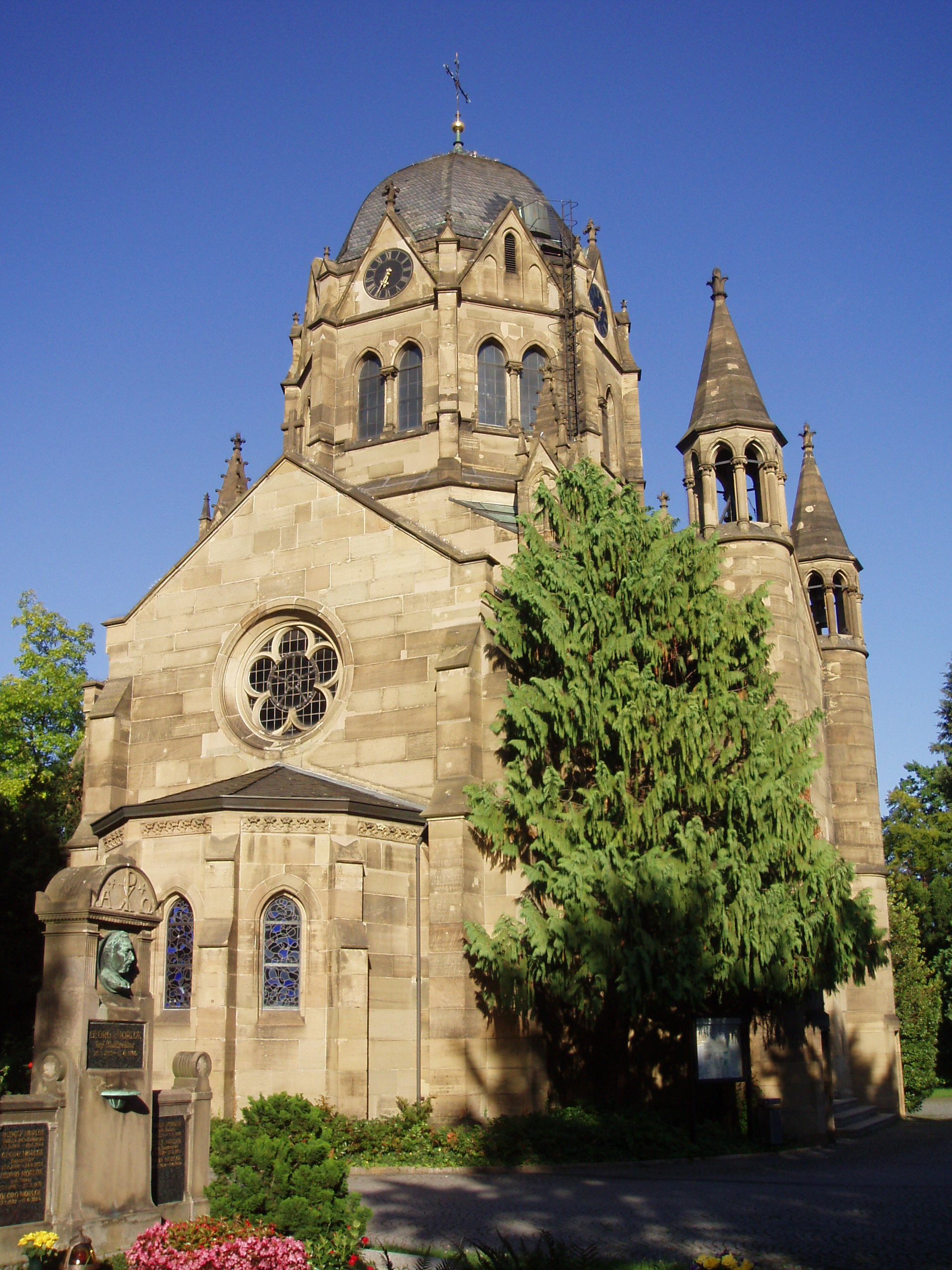
The history of the Russian Orthodox Parish of St. Alexander Nevskij in Stuttgart is inseparable from the history of the Pragfriedhof cemetery — and at the same time reaches deep into the 19th-century ties between Russia and Württemberg. What was once built as a small funeral chapel of a municipal burial ground is today a living place of Orthodox worship according to the ancient calendar, where Church Slavonic and German resound in a single, undivided voice.
Russian Roots at the Württemberg Court
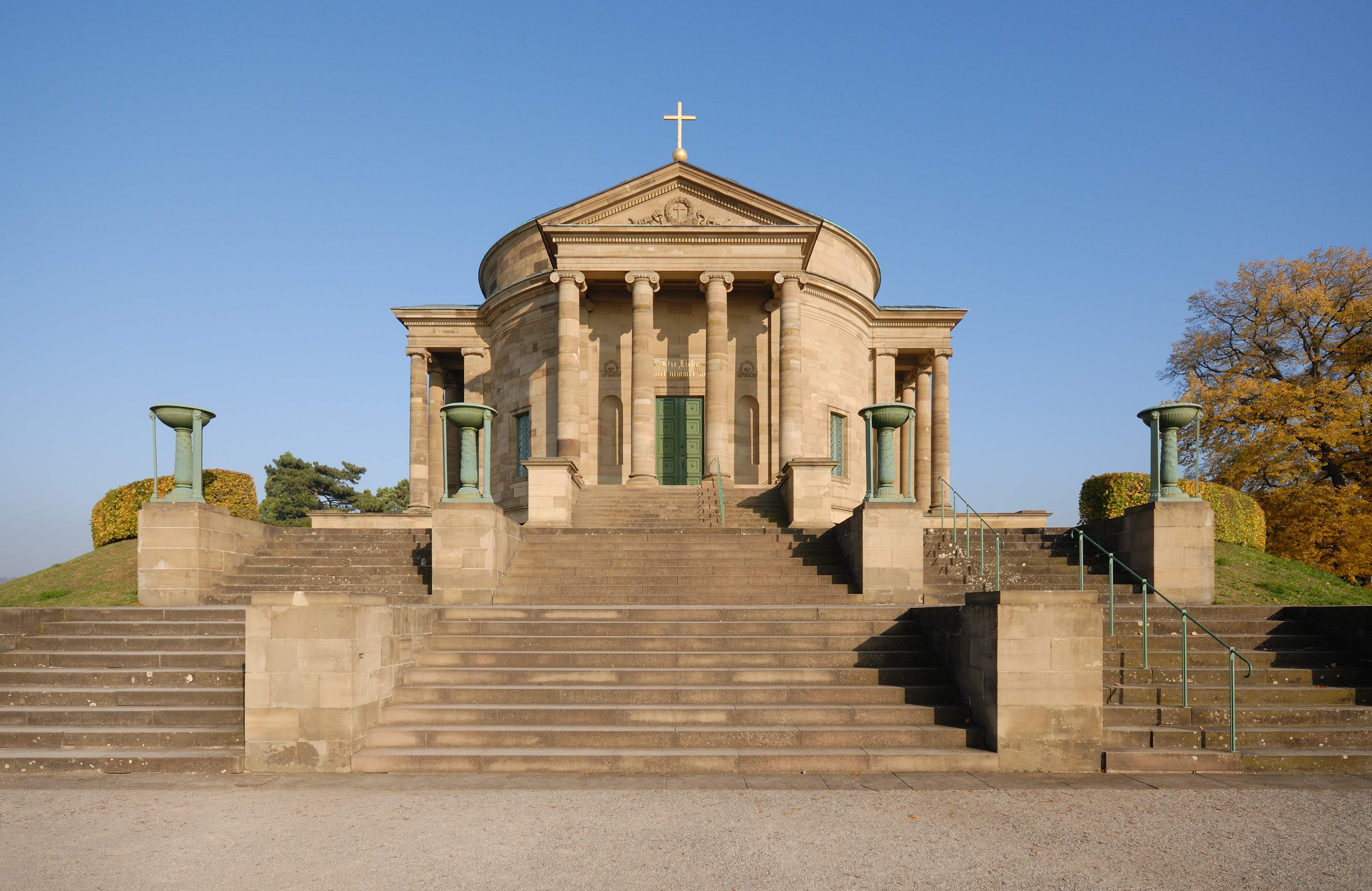
The Orthodox presence in Württemberg dates back to 1816, when Grand Duchess Catherine Pavlovna of Russia — sister of Tsar Alexander I and later Queen of Württemberg as the wife of King Wilhelm I — entered Stuttgart. After her early death in January 1819, the Russian Orthodox sepulchral church for the Queen on the Württemberg Hill above Stuttgart was consecrated in 1824. With it began the unbroken tradition of Russian Orthodox worship on Württemberg soil.
A second equally significant root runs through Queen Olga Nikolaievna, daughter of Tsar Nicholas I, and her niece Duchess Vera. After Olga's death, Vera campaigned for the construction of a Russian Orthodox church in the city of Stuttgart itself, which culminated in the consecration of St. Nicholas Cathedral on the Seidenstraße in 1895.
The Chapel in the Pragfriedhof — a Bridge Between Worlds
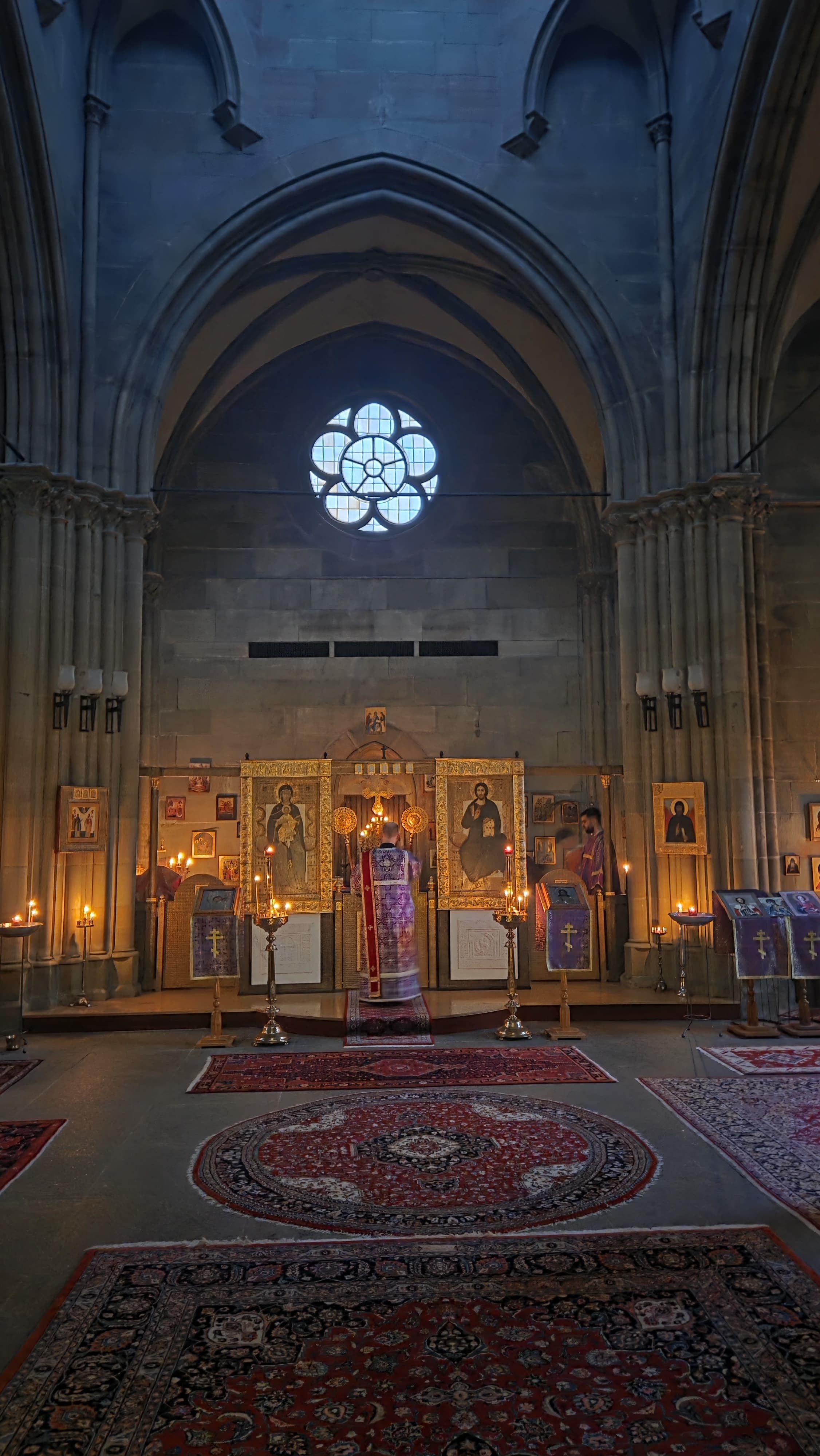
The Pragfriedhof itself was laid out in 1873 and is to this day considered a cultural-historical ensemble: at the intersection of its cruciform axes, the Art Nouveau crematorium (opened in 1907 to plans by Wilhelm Scholter) and our present parish church stand facing one another. The chapel in which we today celebrate the Divine Liturgy was originally built as a funeral hall. Only decades later, under the impulse of the growing Orthodox diaspora and in particularly close connection with the Archdiocese of Orthodox Parishes of Russian Tradition in Western Europe, was the space rededicated as a freestanding Orthodox parish church.
The Waves of Russian Emigration
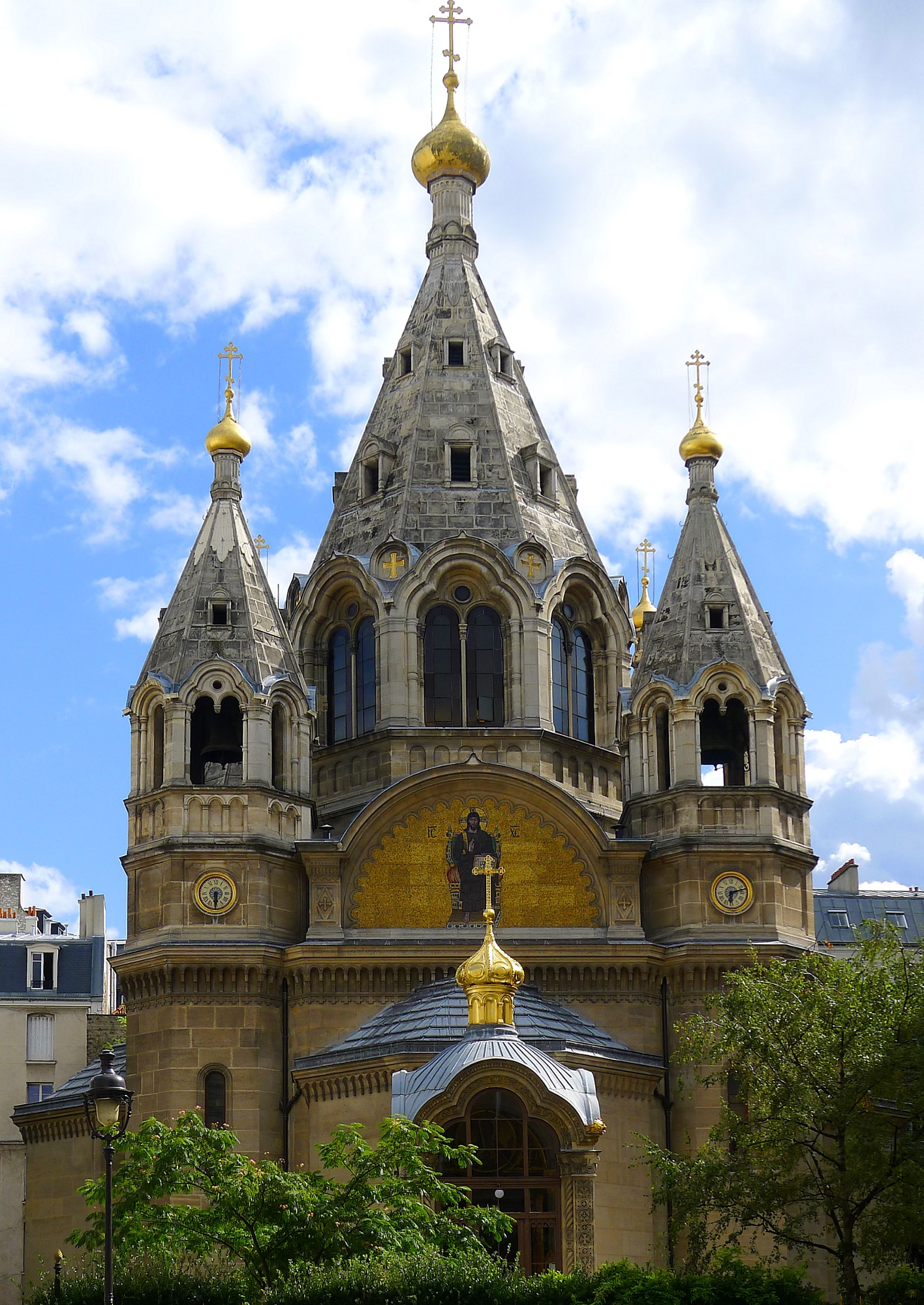
After the October Revolution of 1917 and especially after the Second World War, many Orthodox Christians — from Russia, Ukraine, Belarus, Bessarabia — found a new homeland in southern Germany. They brought their holy icons, their chant traditions, and above all their unwavering fidelity to the Julian calendar. On Württemberg soil a community took shape that first celebrated the Holy Mysteries in private homes, in borrowed rooms, and in cemeteries — animated by the same spirit that in distant Paris sustained the Saint-Serge Institute of Orthodox Theology and the Cathedral of St. Alexander Nevsky on the rue Daru.
The Archdiocese — Paris, Constantinople, Moscow
Our parish stands in a canonically eventful tradition. The "Archdiocese of Orthodox Parishes of Russian Tradition in Western Europe", centered at the Cathedral of St. Alexander Nevsky in Paris, arose from the parishes founded by those Russian émigrés who had fled to Western Europe after 1917. In 1931 the Archdiocese under Metropolitan Evlogy placed itself under the Ecumenical Patriarchate of Constantinople — a stopgap that quickly became part of its identity.
For eighty years the Archdiocese remained under Constantinopolitan jurisdiction. On 27 November 2018, however, the Holy Synod in Constantinople unexpectedly resolved to dissolve the Exarchate. At an extraordinary General Assembly the overwhelming majority of clergy and laity rejected this decision; in the autumn of 2019 the Archdiocese under Archbishop — now Metropolitan — John of Dubna united with the Moscow Patriarchate as an autonomous structure. Our parish in Stuttgart, in communion with the sister parishes in Düsseldorf, Balingen, Albstadt, and Krumbach, has faithfully walked this path.
A Bilingual Parish — Slavonic and German
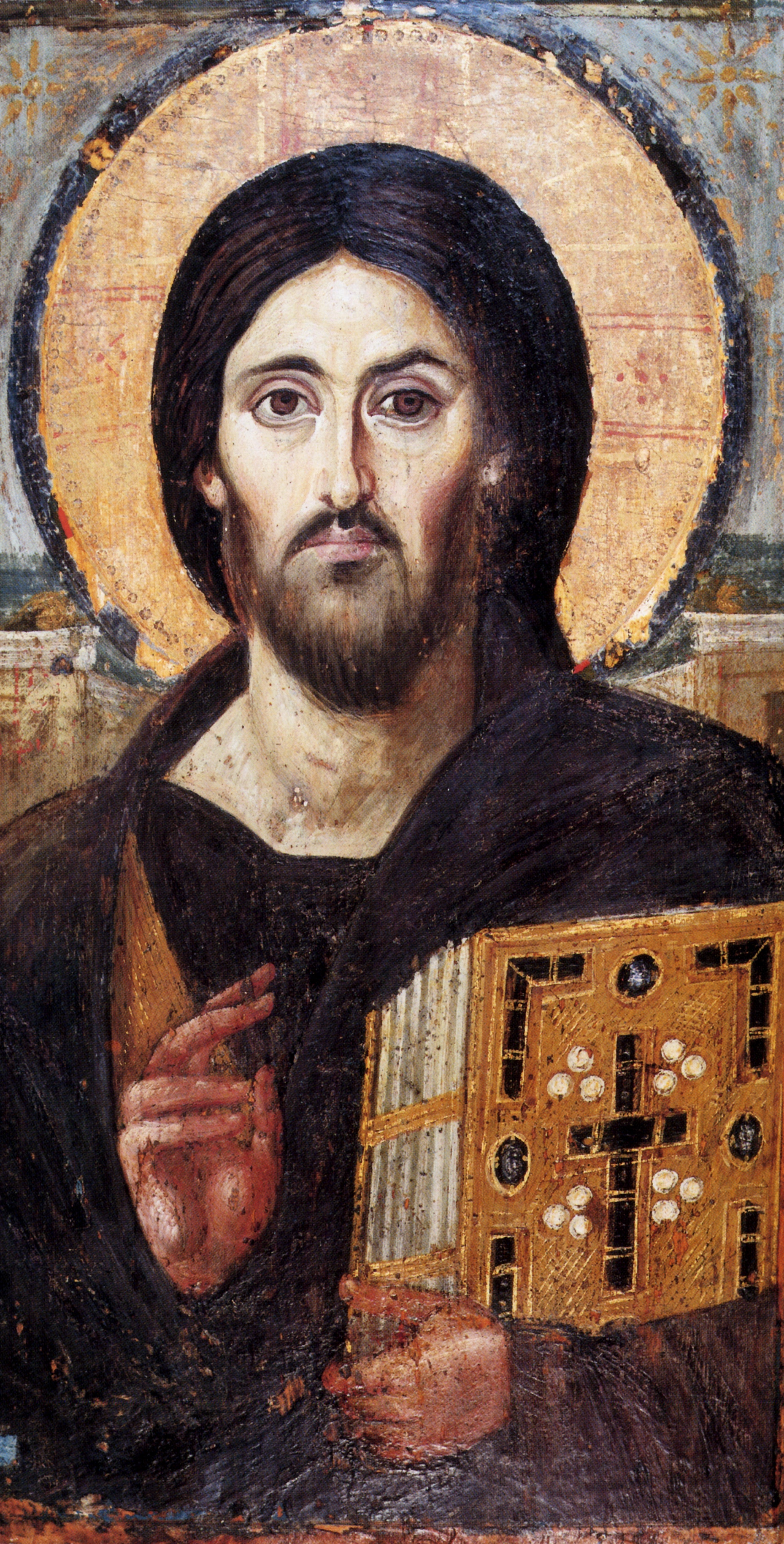
While the sister parishes in Düsseldorf, Balingen, Albstadt, and Krumbach celebrate their services entirely in German, Stuttgart — the only parish of our Archdiocese in Germany to do so — has deliberately chosen continuous bilingualism: the Church Slavonic of centuries-old tradition is woven verse by verse with the German of our present homeland. This conscious bridge allows converts, second- and third-generation children, and newly arrived faithful equally to feel at home.
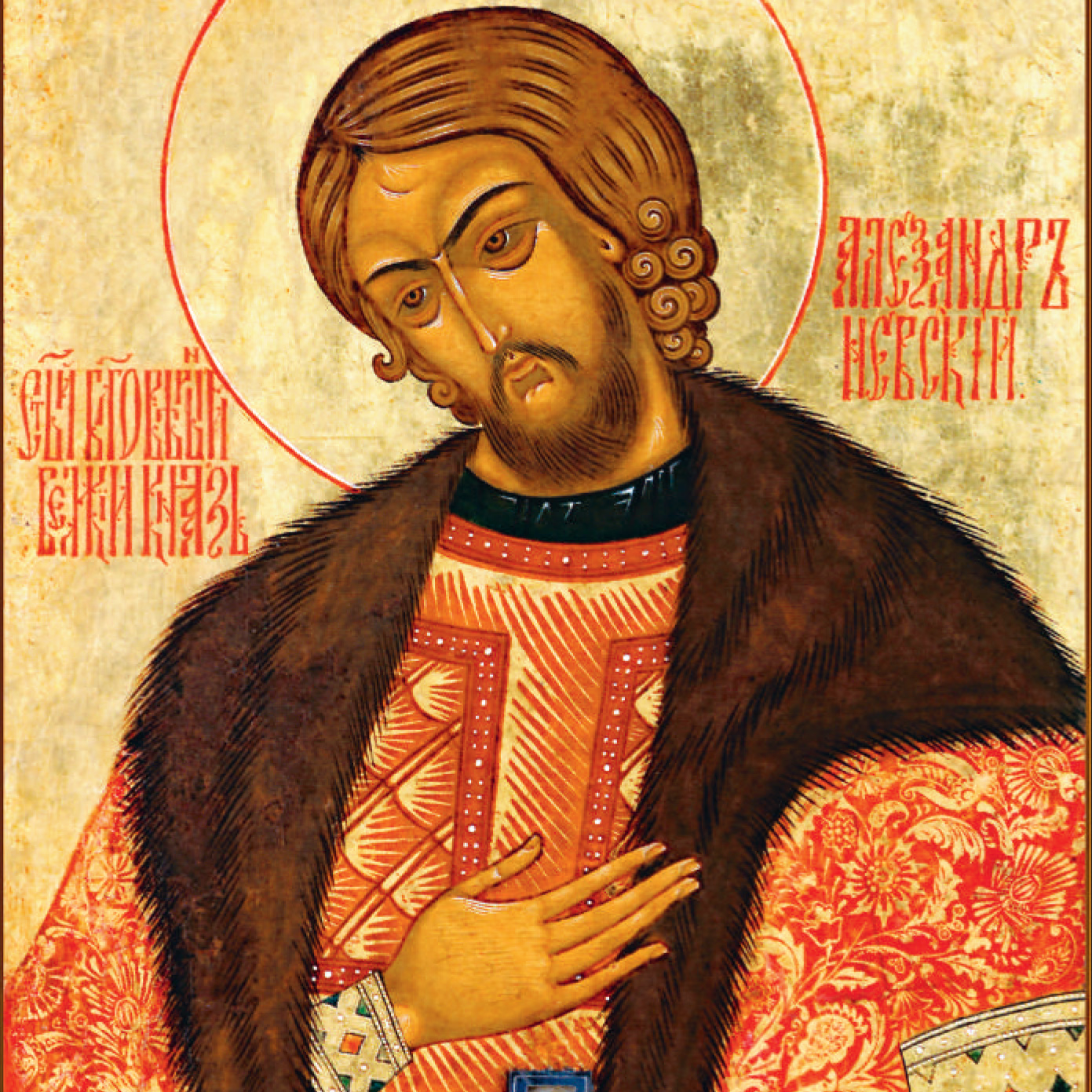
Saint Alexander Nevsky — Our Heavenly Patron
Our church stands under the special protection of the holy Right-Believing Grand Prince Alexander Nevsky († 1263). We commemorate him twice a year according to the Julian calendar: on 23 November (his principal feast, the day of his repose) and on 12 September (the day of the translation of his relics to Saint Petersburg). These feasts are the spiritual peaks of our parish life, in which our bond with the holy prince, defender of Orthodoxy on the Neva, is renewed in a special way.
Today
Today our parish is a living community of people from many backgrounds and generations, bound together by the same faith handed down to us by the holy Fathers. We celebrate the Divine Liturgy on Sundays and Great Feasts, Vespers on Saturday evening, Great Compline during Great Lent, and the Bright Paschal Matins of the Holy Pascha night. There are regular conversation circles, Confession following Vespers, and the Holy Mysteries (Baptism, Chrismation, Holy Matrimony, Holy Unction) upon request. Our supporters' association „Freunde der Orthodoxen Kirche russischer Tradition in Württemberg e.V." bears the financial and organizational burden of parish life.
"For where two or three are gathered together in my name, there am I in the midst of them." — Matt. 18:20